
After waiting over five years for my ADHD assessment, I finally began the process — only to discover how deeply unfriendly, bureaucratic, and depersonalising the system can be for people like me. This wasn’t news to me intellectually, but now I have a felt sense of it in my body…
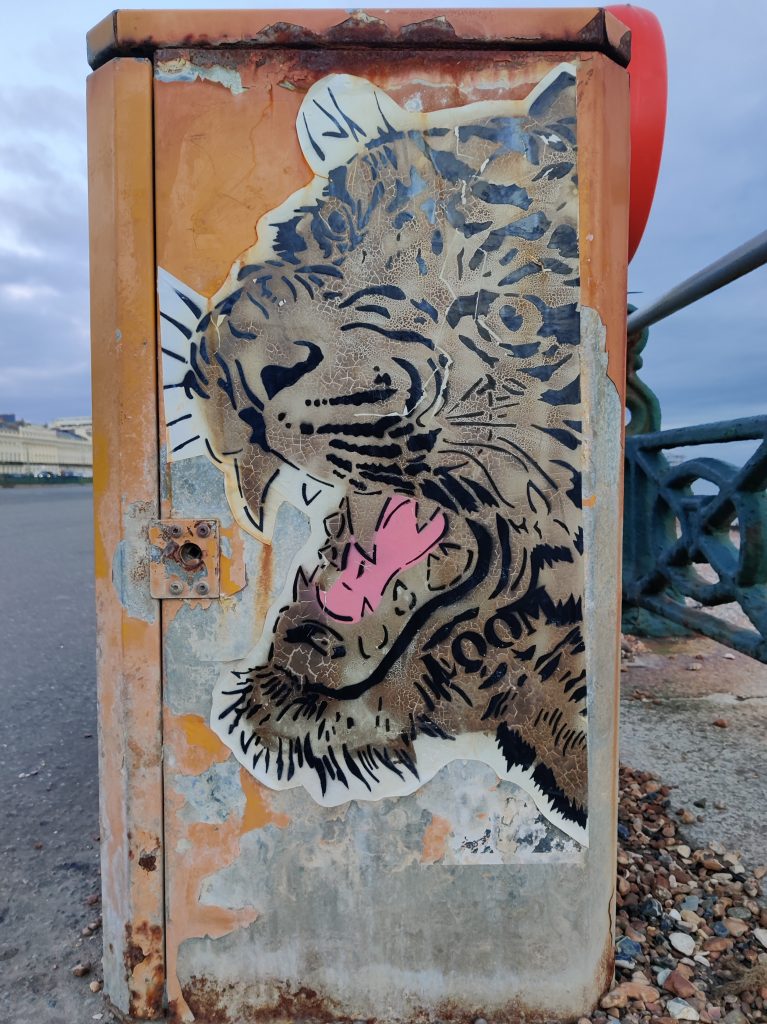
Photo by Julia Fry 2025
The irony of a system that’s not built for us
I filled out a lot of forms, noting on them that form filling is not a helpful way to engage me. It’s almost like the assessment system wasn’t built with ND people in mind. The only way I could have gotten through the form filling was by praying hard at my altar in the morning for grace and flow and a sense of love and compassion in my heart as I go through the process, plus body doubling with my partner. His kind, compassionate, loving presence enabled me to do the things that would have had me stomping around my flat in rage had I been alone.
The colour-shape test experience
The colour shape test set up was infuriating, especially being instructed to remove all ‘clutter’ from my desk including paintings. How rude! All the (many) things on my desk are meaningful to me and I love them; they are not ‘clutter’! I did not realise I was going to be filmed during the test. I thought the video part meant I would give my view of how the test was for me at the end, so I was completely unmasked during the test.
There I sat, having followed the instructions to the letter (reading each aloud to stay focused), on my chair without arms (the chair) or wheels, curtains drawn, light on, all of my personal effects in piles on the floor behind me, where I couldn’t see them. I won’t say what the test is as I don’t want to influence you if you’re waiting for your assessment, but you can look it up on the internet if you’re curious anyway. I was told to stay seated, feet on floor, and don’t lean on the desk.
At first I named aloud what I saw to stay on track. But focus wavered—thoughts intruded, so I sang, fidgeted side to side, and waved my hands to cope. I blurted, ‘How long? I’ll never get this time back!’ and later, ‘Kill me now!’—hands raised skyward. Several times I almost leaned on the desk, remembered I mustn’t, and stopped myself. I’d have moments of focus but a lot of it was moving, singing, and talking to keep myself sane in the boring, monotonous task.
Finally, it finished and I felt relief. Taking a deep breath, I prepared myself for a video interview, where I would share how difficult it was for me to stay focused on that task. But, instead, the screen said, “test completed”, and took me back to the list of forms. I googled the test, asking what the point of it was, and found that it videos the participant. It dawned on me that I had unknowingly shared my unmasked self with a stranger(s).
Leaving my (now very untidy) therapy room, I headed to the lounge to get a hug from my partner, and to share the experience. I felt both horrified and elated. I felt utterly myself. I could see how I found it so hard to be still in an oppressive, bureaucratic situation, and it all makes sense why I can’t do boring work. It reminded me of being a teenager in art class and all the movements and sounds I used to make. I also felt exposed.
Naming systemic shame
I spent a whole day doing those forms. I took the opportunity to address systemic shame when I saw it. For example, my answer to a question about whether my managers have pointed out to me the “symptoms” that I talked about in previous answers:
No. I am a self-employed psychotherapist so I don’t have managers. When I’m with my clients, I’m interested in what they share with me because the conversations are deep and not small talk, and I use fidget toys to occupy my hands so I can listen well. In peer supervision or conversations with colleagues we are mindful of treating one another with respect so we wouldn’t point out these things to one another and we also are respectful of each other using things like creative materials whilst listening to one another. I’m also an artist and I do a lot of work with a charity called Outside In. The people there are also very respectful and accept people’s differences so they welcome us however we are. As an astrologer, I channel the archetypes as I read a person’s natal chart and my whole body is very animated as I share information from their chart so it’s not a problem there either. I used to work in admin roles but that was years ago and I don’t remember the appraisals, although I particularly remember hating having to do minutes of meetings because I couldn’t remember what had been said so I couldn’t summarise. Luckily people didn’t really read the minutes anyway.
And here is my answer to a question about whether I have a history with an eating disorder:
Yes. When I was 14 I had Bulimia Nervosa, which I lived with off and on until my late 20s. Now I don’t have an issue with food (or the underlying trauma that creates conditions for an eating disorder, other than the systemic trauma that is ‘Western’ society).
I felt fired up as I answered the questions on these forms, not least because they represent the pathologisation of human beings for being different to what’s considered “normal”, even though that is a concept and not real. I feel angry at the medical model for the insensitivity and at the stupid systems of neo liberal capitalism that I (and you) are trying to survive in.
Releasing trauma and reclaiming wholeness
When I meet aspects of a system that deny my personhood, I try to do it with integrity and I feel I did that with this assessment. There was a cost to me, however. That evening my partner suggested a walk as I hadn’t been out all day. As I got ready, I felt some shivers that I recognised as the need to release trauma. I called out to my partner that I needed to lay on my bed and shake for a while.
I got on my bed, on my back, feet flat, knees bent and resting against each other, and the trembling and shaking moved my body. My partner came and laid next to me, quietly. We laid like this for a while and eventually the tremors stopped and I sat up, smiling. I am glad that my body knows how to release trauma (now), and that I have loving relationships with my partner and close friends. This process is hard even with the amazing resources I have. I appreciate how much harder this process is for people with different intersectionalities to me, and different resources.
This experience reminded me how healing and self-awareness don’t emerge from compliance with oppressive systems, but from connection — to the body, to love, and to truth. If you are ND and want some therapeutic support from someone who gets it, and is empathic and genuine, I offer a free 20 minute initial chat so we can see if we’re a match to work together. There is a link below to book one, if you’d like.