I’m Julia, Creative Counsellor and Artist, and I work with people who are neurodivergent (e.g. ADHD, Autism, Dyspraxia, Dyscalculia, Dyslexia, and many more) to make things that help to make sense of RSD, time blindness, and putting things off (to name just 3. I know there’s more).
Do you find it hard to start?
Or get triggered to the point of rage?
Or feel stuck in scrolling / TV / or other kinds of bingeing?
I can imagine the beating yourself up that goes with those things. Feeling bad, or saying horrible insults to yourself that you wouldn’t say to someone else. Makes it feel even worse.
You might not feel worthy of help and I understand this. I’ve felt like this at times. It can feel like a big step to even reach out.
Creative therapy can help you:
- Connect to your own rhythm for working, instead of following the norm, so you can feel consistent in starting things you need to do, and feel like you’re making progress rather than going round in circles
- Recognise the build up of pushing down your feelings to avoid confrontation and safely feel them so you can communicate your needs as well as taking care of others’ needs, so your relationships feel more respectful and nourishing
- Become aware of feelings (that you don’t have to name), so you can act on them without leaving it to the last minute (like going to the loo or eating, for example), and feel calmer in your everyday life
I am ADHD and have taken my time to unlearn the habits I thought I needed so that I could be ‘normal’. They seem to work for ‘neurotypical’ people but not for me or any of the clients I’ve worked with.
Each of us is unique and so we each have nuances that need to be seen and heard. In this way, personal creativity is a way to feel safe enough to allow being seen and heard.
A lot of my clients have felt weird in a bad way. Some of this judgement of the weird as bad came from outside of them and, to survive, they continued to judge themselves harshly.
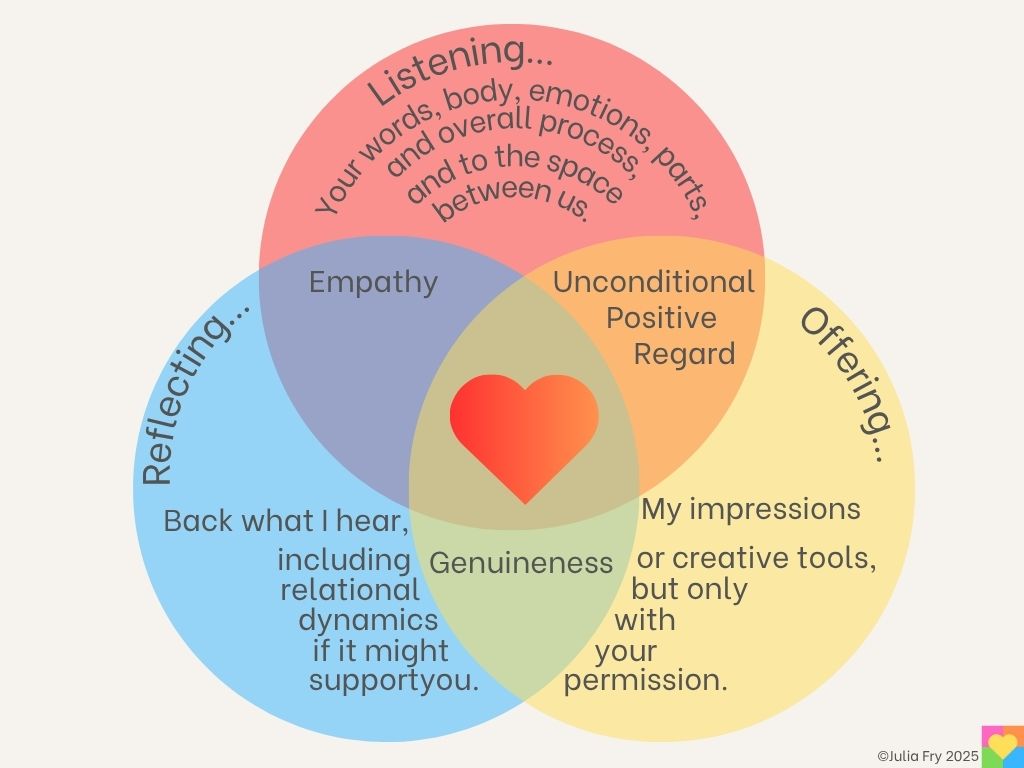
In therapy sessions they’ve made things that helped them understand and accept themselves. Or I’ve drummed and they’ve felt the beat in their bodies, making them feel safe and relaxed. Or we’ve listened to songs together that they really like and we’ve explored how it connected to what was going on in their life.
Creative ways of working seem to make therapy a bit less hard than just talking. They can give us something to focus on that isn’t all on you. Creative play takes the edge off the intensity of therapy.
I’m also a shamanic practitioner and full shamanic healings are available to you too – please do ask, if you’re interested.
Fees and First Steps
- Fees are £75 a session
- Free 20-30 minute video (or phone) call to see if we’re a good fit
- If I’m not the right person to support you, I’ll gladly signpost others for you to reach out to.
Please do reach out to me. I’d love to hear from you.